Leathes Prior act for successful local business in High Court claim to stop termination of franchise agreement
Yesterday (16 November 2023), judgment was handed down in The Burke Partnership (a firm) v The Body Shop International Limited [2023] EWHC 2897 (Ch). A successful outcome for Leathes Prior client, The Burke Partnership, in regards to stopping the termination of a franchise agreement for their Norwich & Cambridge stores.
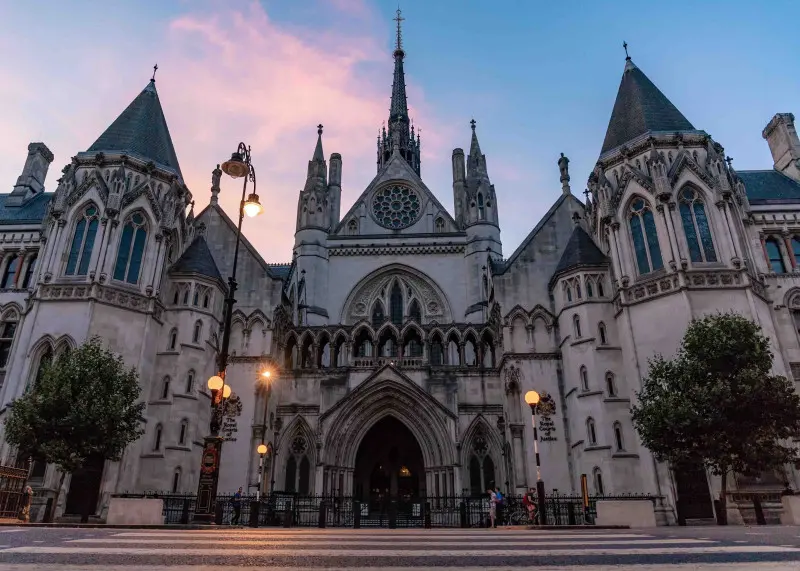

Judgment was handed down yesterday (16 November 2023) in The Burke Partnership (a firm) v The Body Shop International Limited [2023] EWHC 2897 (Ch). The case related to the operation of “Body Shop” cosmetics stores in Norwich and Cambridge. These stores are (and have always been, since their inception in the early 1980s) operated by a family partnership in accordance with franchise agreements granted by The Body Shop.
Those agreements have been renewed every five years since the 1980s, until recently when The Body Shop sought to terminate the agreements. Ultimately, proceedings were issued, with the Burke Partnership seeking declarations from the Court as to the status of the agreements. By its judgment, the Court held that the agreements had not been validly terminated.
The dispute itself turned on the interpretation of the agreements (one for Norwich and the other for Cambridge, although on materially identical terms). Neither agreement contained an express termination provision allowing termination without cause, and both provided that they could be renewed on terms which included further rights to renewal. So as to say, so far as the agreements continued to be performed and notices continued to be served, the Burke Partnership could continue to be the Body Shop’s franchisee and operate stores in Norwich and Cambridge.
The Body Shop claimed that the agreements should be read as allowing only one extension, and that after that point (since the early 1990s) the parties had been mistaken as to the legal position on the agreement. In the alternative it said that the Court should imply a right to terminate into the contracts.
The court agreed with us that the plain wording of the agreement (together with the absence of a right to terminate on reasonable notice as The Body Shop had sought to do) meant that the Burke Partnership was entitled to a further renewal. For lawyers, the case provides interesting commentary on the interplay between construction of a contract and implication of terms.
Of course, this outcome came as a result of much hard work from the Burke Partnership, the team at Leathes Prior (in particular Mike Barlow and Polly Langford who worked on the case alongside me) and Simon McLoughlin of Selborne Chambers who was instructed throughout the case and represented the Burke Partnership at trial. It is fantastic to have been able to achieve a positive result for a great local family-run business.
If you have any queries around franchise agreements please do not hesitate to get in touch with our Litigation and Dispute Resolution Team via 01603 610911 or email info@leathesprior.co.uk.










%20copy.jpg)