A New List on Listing
The Practice Direction on Listing in the Criminal Courts became effective from 01 October 2026, which introduces for the first time a National Listing Framework for Criminal Courts in England and Wales. Dylan Owen explains what the listings are and what the changes mean.

Introduction
Before we delve into the Practice Direction on Listing in the Criminal Courts, effective from 01 October 2026, which introduces for the first time a National Listing Framework for Criminal Courts in England and Wales, I believe it is important that we first take a step back and understand what listing actually is, why it matters and, perhaps most importantly, why change has been considered necessary.
After all, the administration of justice is not simply about the decisions courts ultimately make, but also how fairly and efficiently cases are managed along the way. Against the backdrop of continuing delay within the criminal courts, the new Framework represents an attempt to bring greater consistency, transparency and structure to that process, whilst preserving the flexibility and judicial discretion that individual cases inevitably require.
What is Listing?
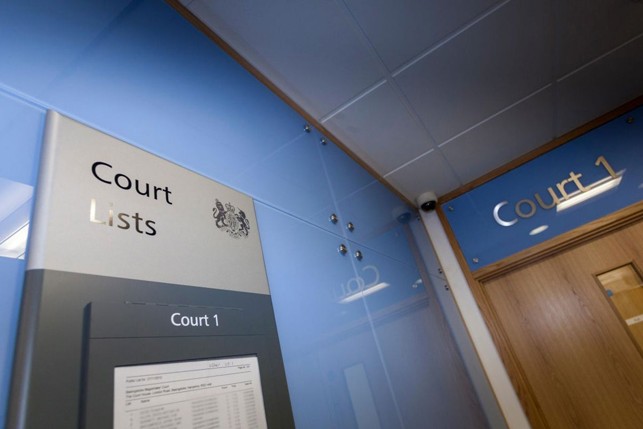
In essence, court listings set out the practical details of the cases coming before a court, including hearing times, courtroom assignments, case reference numbers and, most importantly for us, the defendant, our client.
In the Magistrates’ Court, this is relatively straightforward,with daily lists readily accessible through Courtserve.
The Crown Court is slightly more nuanced, with cases potentially appearing across several different lists and on Courtserve and Xhbit. The daily list tells us what is actually due to happen at court that day, whilst the firm list contains trials with a confirmed date. By contrast, the warned list contains trials which are effectively on standby and may be called on at relatively short notice during a specified warned period. Finally, the trial list provides the wider picture, bringing together the firm and warned trials allocated to that Crown Court.
What is the Issue?
At this juncture, you, or at the very least I, may be wondering why this shift has occurred in the first place. Put simply, delay.
The criminal courts continue to face a significant backlog, with the consequences felt not only by the courts themselves, but by the defendants, victims and witnesses waiting for cases to be heard.
Indeed, Lady Chief Justice Baroness Carr described “minimising the impact of delay on victims, defendants and witnesses” as the guiding principle behind the new approach. Lord Justice Edis similarly emphasised the “human impact of delay,” alongside the need to make fair and efficient use of judicial and court resources.
The Framework therefore seeks to tackle that problem through greater fairness, consistency and efficiency, whilst importantly ensuring that listing remains a judicial function.
What is the Solution?
The answer is the National Listing Framework, the first national framework governing how criminal cases are listed across both the Crown Court and Magistrates’ Court. Importantly, it goes beyond simply deciding when a case will be heard. It establishes a common approach to how cases are prioritised, how the impact of delay is considered and how limited court resources are used.
Historically, listing practices have developed locally, which has allowed courts to respond to their own circumstances, but has inevitably resulted in different practices emerging across the country. The Framework does not seek to do away with that local expertise or judicial discretion. Instead, it provides a common language and set of principles within which that discretion can continue to operate. Put simply, the aim is consistency, not uniformity.
Principle and Practice
So, how does all of this translate into practice? In the Crown Court, the process begins at the Plea and Trial Preparation Hearing, where the judge will assess the case, allocate it a Priority Tier and determine how it should be listed for trial. The tiers are, in broad terms:
- Tier 1: cases involving a death, or exceptional vulnerability where delay is likely to have an exceptional impact.
- Tier 2: cases where delay presents particular concerns, including the quality of evidence, effective participation, witnesses travelling from abroad, significant contested expert evidence or trials exceeding five days.
- Tier 3: cases requiring evidence from lay witnesses which do not fall within another tier.
- Tier 4: cases relying predominately on police, investigator or documentary evidence, or otherwise suitable for shorter trial management.
- Tier 5, 6 and 7: cases allocated respectively to a High Court Judge, the Terrorism Cases List or the Economic Crime List.
Importantly, seriousness alone does not determine the tier, nor does the fact that a defendant is in custody. The circumstances of the individual case must be considered.
From there, trials will be listed either for a Fixed Date, where there is a high level of confidence that a judge and courtroom will be available, or a Flexible Date, where the trial is expected to take place within an identified period. As a general rule, Tiers 1, 2, 5, 6 and 7 will be Fixed Date, whilst Tiers 3 and 4 will be Flexible Date, although the court retains discretion to depart from that where the interests of justice require it.
What remains unchanged, however, is who ultimately makes those decisions. Listing remains a judicial responsibility. Judges retain the discretion to make decisions requiring judicial judgment, whilst Listing Officers continue to provide the practical and operational expertise necessary to make those decisions work.
Comment
It is, of course, extremely early days. The Framework only took effect last week at the time of writing and, whilst greater consistency, better information and earlier identification of listing issues are undoubtedly welcome in principle, its real success will depend upon how effectively those principles translate into practice.
Ultimately, the proof will be in the pudding. Fewer delays, greater certainty for court users and more effective use of limited court resources would represent a welcome step forward. For now, though, it is very much a case of wait and see. We will certainly be following its implementation closely.

















%20copy.jpg)