To Scoot or Not To Scoot: That is the question!
Following the launch of ‘Beryl’ bikes in Norwich in March 2022, a fleet of 100 e-scooters were added later that year, as part of the Department for Transport’s pilot scheme. Kate Smith discusses the differences between hire and private e-scooters and what they can mean if you're injured by one.
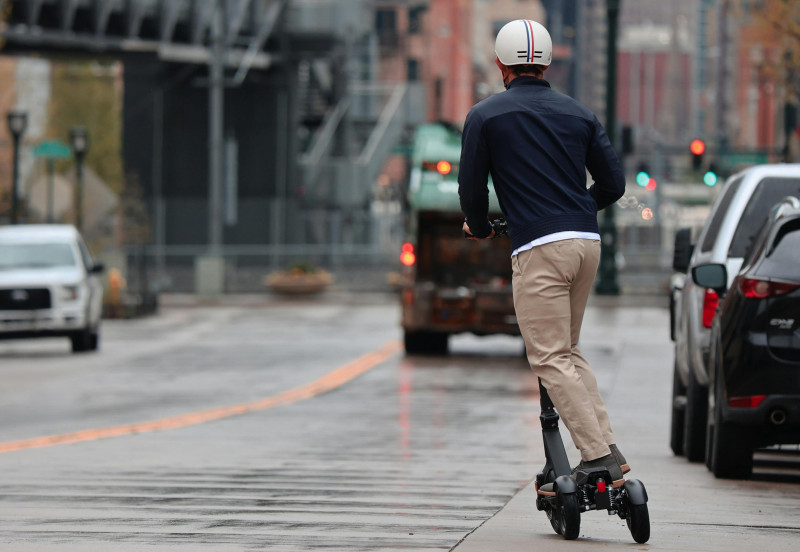

Following the launch of ‘Beryl’ bikes in Norwich in March 2022, a fleet of 100 e-scooters were added later that year, as part of the Department for Transport’s pilot scheme, which has been extended until May 2024.
Whilst feedback from the scheme suggests that nearly a quarter of journeys by car, van or taxi have been replaced with e-bikes or e-scooters - which is of course a positive step in the reduction of carbon emissions - the Parliamentary Advisory Council for Transport Safety (PACTS) has warned of the risks of using e-scooters, recording 37 fatalities since 2019, and an increase in serious injuries, including traumatic brain injuries and fractures. Neurosurgeons have also likened the head injuries on e-scooters to those suffered by riders of motorcycles, rather than pedal bikes.
Not only have there been reports of riders suffering serious injuries whilst riding e-scooters – recently a 49-year-old man who allegedly suffered a critical head injury after falling off an e-scooter in Liverpool - but they have also been linked to the cause of house fires.
Our personal injury team has considered the legal and insurance implications of accidents, involving both hire and private e-scooters, and the latest recommendations from PACTS.
What’s the difference between hire and private e-scooters?
Only rental e-scooters available via pilot schemes (‘rental e-scooters’) such as the ‘Beryl’ scheme in Norwich are legal, and regulated to be used on public roads, whereas e-scooters purchased privately (‘private e-scooters’) can only be used on private land.
Currently e-scooters which are part of pilot schemes, are limited to 15.5mph, and require users to hold a provisional or full driving licence which must be registered on the App before use. The scheme also provides authorised riders with insurance cover under its pilot scheme, but that cover generally only extends to injuries suffered by third parties or property damage, rather than injuries suffered by the rider, and has exceptions such as: if the user is under the influence of alcohol, is riding on the pavement or with a pillion passenger.
Private e-scooters, on the other hand, can only legally be used on private land (with the permission of the landowner), and as such, there is no road traffic insurance available for their use on public roads currently.
So, what does this mean if you are injured by an e-scooter?
Well as you can imagine, the situation is not crystal clear, and depends on a number of factors including: whether the e-scooter which caused your injury was a rental under the pilot scheme or privately owned, where it was being ridden at the time of the collision, whether the rider was correctly registered, and whether they were using the e-scooter correctly.
Generally if you have been injured by a rental e-scooter, and you were not the rider, you may be able to make a claim for personal injury against the pilot scheme insurance, as long as the rider has complied with the insurance, for example was not riding on the pavement, or under the influence of alcohol.
If, however, you were injured by a rider of a private e-scooter then the position is far from clear. It is highly unlikely the rider will have insurance, leaving you with a potential claim against the Motor Insurers’ Bureau. However, it is unclear whether e-scooters fall within the definition of ‘a mechanically propelled vehicle’ currently, and this is something which is currently being considered by the Government.
Future changes
PACTS are continuing to research the safety of e-scooters, particularly whether injuries resulting from collisions with e-scooters are reported to the Police, and the severity of the injuries suffered.
The Department of Transport has also unveiled new rules including:
- the requirement for users to submit a picture of the front of their driving licence under new minimum standard of verification; and
- allowing local authorities to change the extent of areas covered by e-scooter schemes, and the fleet size.
With the development of technology, and a push for more eco friendly transport, it is likely the use of e-scooters will increase and the rules relating to their use will be amended and tightened up, to align with PACTS research. Leathes Prior will continue to stay updated on this subject as it develops.
If you are considering bringing a personal injury claimwith regards to an e-scooter, please contact a member of our specialist team who will be able to talk through your claim with you. Contact our Personal Injury and Clinical Negligence Team via 01603 610911 or email info@leathesprior.co.uk.















%20copy.jpg)