Changes to the Probate Registry
With the Probate Registry experiencing a significant backlog of cases since COVID-19, new probate processes were introduced earlier this year which we are now starting to see the effects with the online application process.
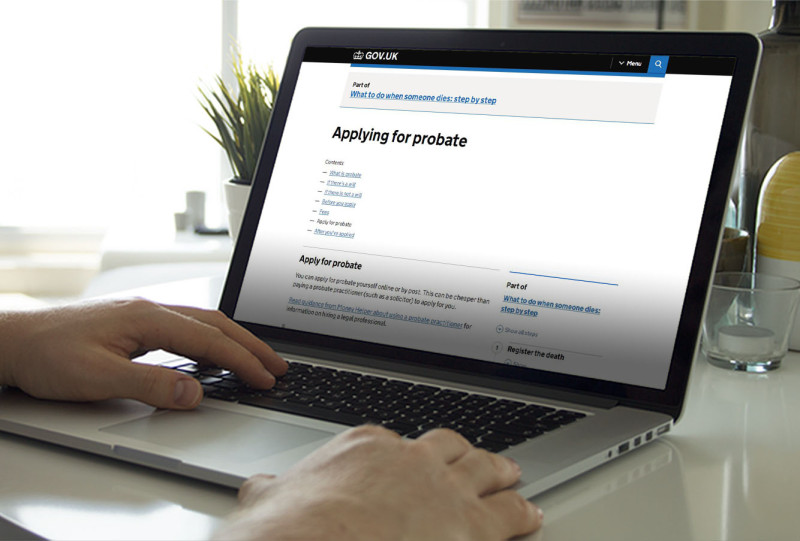

The Probate Registry has experienced a significant backlog of cases since COVID-19, which we still see the effects of at the current time, with probate taking around 16 weeks to be granted. However, the Probate Registry has introduced changes that appear to be aiding the system, notably in relation to estates where there is an inheritance tax liability, and we are now seeing some probate applications being returned to us within as little as 8 weeks in some instances. In this article, we explore the old probate application system, compared to the new one, and how it now works.
What was the previous probate application process?
The process used to be that personal representatives – this may be executors or administrators, depending on whether there is a Will and the terms of it – applying for probate needed to prepare an Inheritance Tax Form, known as IHT400. The Return included Schedule IHT421 which confirmed the inheritance tax due, if any. After a statutory period of 20 working days, HMRC would issue a stamped copy of IHT421 to the Probate Registry, allowing personal representatives to progress the application.
The second stage of the application involved submitting a Legal Statement, which is a declaration by the personal representative that they will administer the Estate in accordance with the law and make a truthful application, along with the original Will to the Probate Registry. Prior to the changes, the Legal Statement could be prepared in advance of HMRC receiving the stamped IHT421. This meant that as soon as the 20-day period had elapsed, the second part of the application could be submitted.
However, it was often the case that the stamped IHT421 had not been sent to the Probate Registry at the point of submitting the Legal Statement, which caused delays in the Grant being issued.
What is the new probate application process?
Changes to the process were introduced on 17 January 2024, and we are very much starting to experience the effects of these. Significantly, it is the introduction of the entire process now being online.
The personal representatives are still required to submit an IHT400 to HMRC, however, the requirement for the IHT421 has been removed, and instead, you must wait to receive a letter from HMRC with a specific code and tax values for the estate.
Only when you have received this letter can you then apply for probate. The code and the estate values provided on the letter are then submitted to the Probate Registry’s online portal. It is the specific code which now allows you to make the probate application, and such application cannot be submitted without a code.
To prevent errors in applications where a firm is instructed, HMRC will notify the lawyer if they cannot provide a unique code and advise them of the next steps required to be able to do so.
By introducing an online system, the hope is that the process becomes more efficient and less reliant on postal timeframes.
By introducing the requirement of receiving a code before being able to apply for probate means that applications cannot be submitted prematurely whereby, they likely include incorrect tax calculations and estate values. Subsequently, if the Registry has fewer queries to raise because of incorrect applications, this should increase productivity with the current and/or outstanding applications.
Are there new costs involved?
The Probate application fee increased on 1 May 2024, to £300. The fee was previously £273.
This streamlined digital approach should reduce delays and create an efficient system for Grants of Probate, ultimately improving the experience for our clients so the distribution of their late loved one’s estate happens quicker and more seamlessly.
If you need any advice or assistance with administering an estate or putting your own Will in place then please feel free to contact our Wills, Trusts and Probate Team on 01603 610911 or via email at info@leathesprior.co.uk.
Note: the content of this article is for general information only and does not constitute legal advice. Specific legal advice should be taken in any specific circumstance.












%20copy.jpg)